
Christina Becherer
SENIOR GLOBAL DIRECTOR OF STRATEGIC PARTNERSHIPS
Christina Becherer is a seasoned leader in international development and humanitarian action, with more than 18 years of experience in designing and managing partnerships around the world. In addition to acting as senior global director of strategic partnerships at Children International, Christina currently serves as an officer of the board of directors at Partnership for Quality Medical Donations (PQMD).
In my role as the Senior Global Director of Strategic Partnerships at Children International, I’m often in spaces and conversations that remind me of how the most powerful solutions can emerge from multi-sector collaboration.
This view was reinforced for me a few months ago when I visited New York to attend meetings that occurred simultaneously with the 80th United Nations General Assembly (UNGA). Dialogue at the UN seemed to lean toward multilateralism, reform and resilience, but what I heard on the sidelines was something more candid—global leaders expressing fatigue with meetings that felt more like stages for elevator pitches and salesmanship than authentic difference making. A growing appetite to roll up our sleeves, share openly and solve together was palpable, and a new truth was taking shape: The idea that organizations must compete—for funding, for visibility, for influence—is not only outdated. It is actively obstructing progress.
This insight comes at a time when the development and foreign aid sector is facing unprecedented disruption. But within that turbulence lies opportunity, if we’re willing to show up differently. At Children International, the Strategic Partnerships team I began establishing nearly four years ago has been built on the belief that partnerships must cross industries and interests to achieve mutual goals.
It is wonderful to see within global development that the natural instinct to compete for resources is giving way to this: a deeper understanding that we must work together to truly accelerate progress and impact. This isn’t just a philosophical stance. It’s a strategic one based on experience. During my recent trip to Zambia on behalf of Children International, I witnessed firsthand how joining forces with others can unlock solutions that no single actor could achieve alone. Partnerships at Children International bring together other nonprofit organizations, corporations, foundations, government agencies, and most importantly, communities, to tackle critical issues affecting children and families.
What struck me most about the work made possible by partnerships at Children International Zambia wasn’t just the success; it was the shared mindset. The collective teams from different organizations, both local and global, never asked, “Who owns this?” or “Who will get the credit?” Everyone was focused on, “How can we make this work better together?”
That’s radical collaboration. Not because it’s flashy or disruptive, but because it’s grounded in humility and shared purpose.
It’s the quiet courage to say, “We don’t have all the answers, but we’re willing to find them together.” That mindset doesn’t just move projects forward—it reshapes how we define leadership, accountability and impact.

Christina and Policy Advisor to the President of Zambia
Back in New York, UNGA 80 echoed this sentiment in its own way. The UN80 Initiative, with its push for reform and operational efficiency, is a recognition that the old ways of working—fragmented, duplicative, competitive—are no longer going to move the giant needle. The country of Zambia’s own statement to the General Assembly underscored the need for genuine inclusiveness and a more responsive multilateral system, especially for countries whose voices have long been sidelined.
In development and partnerships, we often talk about innovation, scale and impact, but we rarely talk about the emotional architecture that makes those things possible: trust, openness and the willingness to let go of ego. Radical collaboration demands that we dismantle the invisible walls we’ve built, between sectors, between organizations and even within our own teams. It asks us to stop measuring success by what we control and start measuring it by what we contribute.
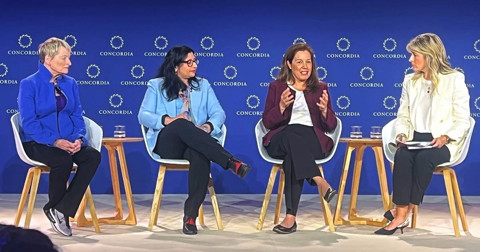
Funding and visibility absolutely matter. Yet, it’s what we choose to spotlight and how we share the stage that defines our leadership. When Children International’s CEO, Susana Eshleman, spoke at the Annual Concordia Summit (which took place in New York during UNGA 80) she didn’t just represent Children International; she also elevated our partners and spotlighted the ecosystem that makes our work possible. That kind of visibility builds trust and drives transformation.
Radical collaboration isn’t just a mindset. It’s my team’s operating model. It’s how we build relationships that will help us end poverty for good. As I look ahead to the final stretch of the UN’s 2030 Agenda, I offer this: Let’s stop competing for impact. Let’s start collaborating for it. Because the future of development will be shaped by those willing to listen deeply, build boldly, and lead collectively.



Comments
You must be logged in to comment. If you have an account, click here to log in.