This is part of a monthly blog series on Children International’s newly evolved program model called Path of Opportunity. Check out Empowering More Youth to learn more. Our global nonprofit helps youth in 10 countries forge a path out of poverty.
In Guayaquil, Ecuador, a group of 6- to 9-year-olds huddle around a game of Jenga. Except this isn’t a typical game. Their leader, Nahim Acosta, is teaching the children about their rights and helping them build self-esteem as part of Children International’s programming.
Acosta explains what rights are and how they can be practiced in daily life. As each child carefully pulls a Jenga piece from the puzzle without the stack falling, they name a right important to them. Some of their replies include:
It’s a simple exercise, but a powerful one. Verbalizing these rights helps children internalize their value and build the confidence to advocate for themselves now and in the future. By learning this lesson alongside trusted mentors and peers, children begin to understand not only what they deserve, but also that they belong.
This moment captures what Children International’s program model, Path of Opportunity, is all about – helping children and youth experience belonging through safe spaces, trusted relationships and an engaging curriculum with their peers.
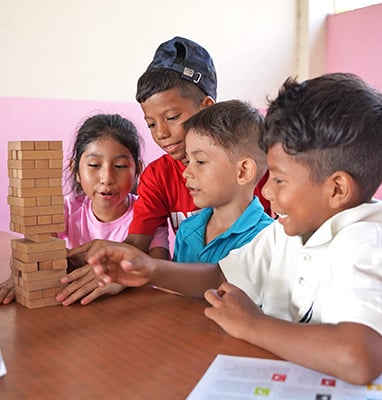
What looks like a game of Jenga is also a lesson in self-worth for these kids in Ecuador.
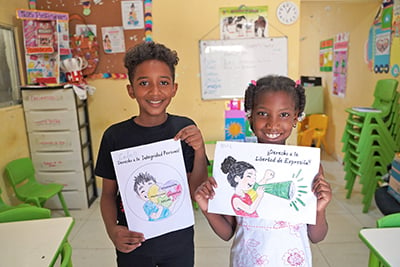
Children in the Dominican Republic learn about their rights. These children are displaying their rights to protection, well-being and education.
Across Children International’s communities in 10 countries, belonging begins with connection. Club Leaders like Acosta create environments in their local neighborhoods that youth can easily access and show up to more consistently. Participants are known by name, feel seen and valued, and are surrounded by their peers.
These spaces – whether it’s a classroom in Honduras, a courtyard in Mexico or a community center in Colombia – are designed to be welcoming and full of possibility. Research shows that peers who learn and grow together have greater success.
“When youth feel safe and supported, they open up. That’s when learning and growth really begin,” says Doug Bassett, Vice President of Global Programs and Operations at Children International. “Creating environments where youth feel both physically and psychologically safe allows them to be their authentic selves and connect with others.”
Path of Opportunity is built on a strong foundation of global research – from such sources as WHO, UNICEF, World Bank and CASEL.
The curriculum centers around these core tenants at age-appropriate intervals:
At its core, the Path of Opportunity program model affirms that children thrive when surrounded by caring adults. Evidence shows that children who do well despite serious hardship almost always have at least one stable, supportive relationship buffering them from adversity. Youth with three or more supportive adults are nearly three times more likely to score high across the “5 Cs” of Positive Youth Development – competence, confidence, connection, character and caring.*
By equipping caregivers, volunteers and trained Club Leaders who guide local peer groups to play this connective role, Children International is strengthening the network of support around each child. These adults stay connected throughout a child’s journey – walking alongside them into young adulthood as they build the confidence, skills and knowledge to transition into adulthood and stable employment.
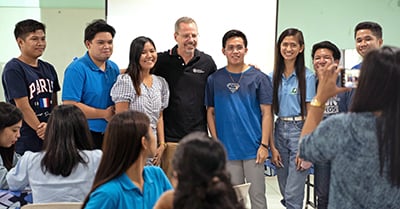
Doug Bassett, VP of Global Programs and Operations, (center) visits with youth participants in the Bicol Region of the Philippines.
“Consistent relationships with attentive adults are among the strongest predictors of resilience,” Bassett shares. “Our Club Leaders understand the reality our participants face, as they come from the same communities. They model empathy, respect and encouragement, along with how to manage emotions in a healthy way. Their role goes beyond teaching skills; they listen, guide and help youth imagine futures beyond their current circumstances.”
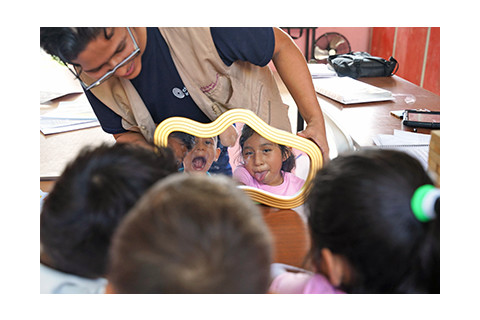
Through a self-reflection exercise, children learn to see themselves in a positive light. Their leader, Nahim Acosta, holds the mirror and encourages them.
The impact of these relationships is evident back in Guayaquil. Acosta, who leads many clubs (age groups) and volunteers, guides the children through another activity. One by one, they look into a mirror and share something positive about themselves. Some answer quickly. Others need encouragement to recognize their own strengths.
When it’s one boy’s turn, he studies his reflection and simply says, “I’m happy.” Behind these two words is something powerful: a child who feels seen and valued. Children International staff witness moments like this time and again. When youth experience this sense of confidence and belonging, they begin to embrace their potential. This is the seed that changes lives.
*Source: Evidence from the 4 H Study of Positive Youth Development by Lerner & Lerner, Tufts University.


Comments
You must be logged in to comment. If you have an account, click here to log in.