Making a difference for Batasan Hills children
By Jocelyn Valle
September 3, 2006
Issue of the Philippine Daily Inquirer
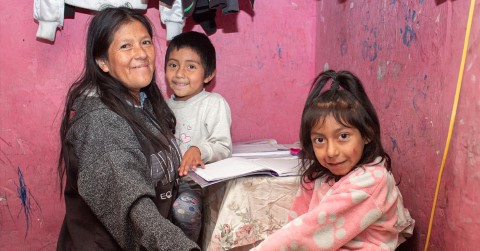
In a room at the Betty Lou Daul Center in Batasan Hills, Quezon City, around a dozen women—each with a child in tow— are waiting for their turn to speak with Jezreel Lacanilao, a field officer of Children International (CI).
There are more women waiting outside. One of them, 29-year-old Annabelle Benabaye, is cradling a child in her arms.
“Her mother is actually my neighbor,” she clarified. “I’m looking after her while her mother attends to her other child in the next room.”
CI is a worldwide humanitarian organization that funds and runs the Betty Lou Daul Center through its agency, Unang Lingap Kapwa Philippines Inc., (Lingap Kapwa). Lingap Kapwa looks after 18,000 children and youths in Quezon City, over 150 of them residents of Batasan Hills.
The two-story, 1,080-sq.-m. center is open from 8 a.m. to 5 p.m. It was built in honor of the late American philanthropist and longtime CI sponsor Betty Lou Daul, whose family, led by her husband Ron, provided the funds for the construction of the building. Ron, with Betty Lou’s sister Ruth Denor and niece Jackie Kempen, attended the center’s inauguration last June 16.
Lots of benefits
Benabaye’s four-year-old daughter Richelle is among the beneficiaries of CI’s programs, which include educational scholarships, free school supplies and regular medical and dental checkups. The children also receive gifts during Christmas, Easter and on their birthdays.
The gifts are usually checks which can be redeemed at select SM branches, said CJ Tarroja, CI communications coordinator in Quezon City. She added that each check is worth US$10.
“Richelle is not scheduled to have a checkup today,” Benabaye said as she picks out a book from one of the shelves at the center’s library. She started reading to the little girl in her arms as three more kids came into the room and got a book each.
“I came here so my neighbor could register her child,” she told the Inquirer. “The sponsorship is a big help for people like us. My husband is a janitor. We have four kids. Sometimes I sell fish balls to earn some money. ”
Studious child
Maritess Azucena, 31, another beneficiary of the program, agreed. Her husband works as a part-time checker at Pier 2; they have three kids. She said she learned about CI and its programs when people from Lingap Kapwa visited their neighborhood a couple of months ago. Right away, she enlisted her middle child, Christian, whom she described as studious.
The seven-year-old boy told the Inquirer that his favorite subject was English. His ambition, he added, was to be a pilot.
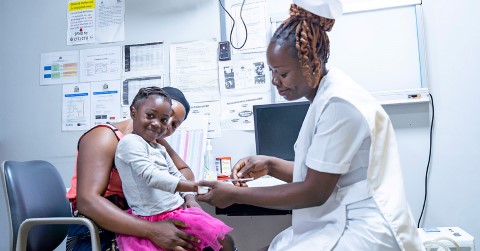
Christian, however, looked sickly. “He has been having coughing spells,” his mother explained as she led him into Dr. John Mark Viray’s room for his checkup. The pediatrician, after finding out that the boy was underweight, gave him free medicine and vitamin supplements.
Mother and son’s next stop was the dentist’s office. After checking Christian’s teeth, Dr. Lilia Turbulencia sent the pair back to the staff room where Jezreel talked to them.
“I’m doing an update of the children’s profiles and their families’ condition,” she explained.
Daily schedule
According to her, Tuesdays, Thursdays and Saturdays are for the children’s medical and dental checkups. On other days, the children write letters to their sponsors—most of whom live in the United States—and attend storytelling sessions with volunteer readers.
Jezreel added that the youngsters are also encouraged to use the library, computer room and multipurpose hall for their studies and group activities.
Other CI sponsors provided additional funding for the center’s other facilities, including the Celerina Marquez King Library and the medical room called the Jeremiah David Johnson Health for Life Medical Clinic.
Although Azucena is happy that her son, Christian, is one of CI’s scholars, she said she wished the organization could take in more than one child per family.
Not everyone, however, can qualify for the program.
Requirements
CI-Lingap Kapwa director Lei Orieste said they only choose underprivileged children aged three to nine years of age, regardless of their religion, culture and physical condition.
Beneficiaries could be orphans or with just one living parent, or under the supervision of a guardian after having been abandoned by their parents, she added.
They must come from compact geographical areas for effective program service delivery and no member of their family should be “enrolled in any similar sponsorship organization.”
Children of school age should also be enrolled in school. “Education is one of the bedrock programs of the agency,” Orieste pointed out, adding that they want each child to grow into a healthy, educated and self-reliant adult.
A case in point is Rowena Aileen Rombano who was a CI scholar from 1991 until March this year, when she completed her nursing degree. She now works as a medical assistant at center.
“CI made a big difference in my life,” she said. “Now, I want to help the current batch of sponsored kids.”
|